Having recently taken courses in quantum field theory and particle physics, I've been noticing more correspondences between quantum fields and metaphysics (some of which was discussed in my previous entry here), but I'd like to bring up one more neat topic: 
Ghosts and Virtual Particles

Believe it or not, there are ghosts in physics. Well, "ghost particles" and "ghost fields", to be precise. When I first heard about them, I was swift to imagine all sorts of ghost fields about the world, ghosts interacting with particles...So what are "ghosts" in physics?
In quantum field theory, particles correspond to fields that can be described as waves. Ghosts are additional fields added to a theory so that the math is consistent. They're a kind of "virtual particle", particles that cannot be observed but are considered to be present in certain particle interactions to make things consistent.
For example, say you have two electrons interacting (see diagram below). Well, one of them will be an electron (e⁻) and the other one will be a positron (e+...this is the antiparticle of the electron. It's just the same as the electron except it has a positive charge. Antiparticles have arrows pointing against the flow of time. Just to confuse you). Time flows from left to right, so the two particles come in and annihilate to form a photon (ɣ), which then does some fancy things before becoming an electron and positron again.
However, we can only observe the initial and final states of particle interactions: the two particles coming in, and the resulting particles coming out (which happen to be the same as the initial particles in this case). But what happens in between?


Well, in quantum physics, what can happen does happen! Basically, any possible interaction can happen inside--any possible one, not anything. So you can't have this: 
i.e., you can't make a cat appear in the loop. So barring strangely appearing Pusheens, the example above shows that a photon is created, it turns into a certain particle and antiparticle (the loop), which then recombine to form a photon. This last photon turns back into an electron and positron. In principle, you could have more loops too (these are known as "higher order" diagrams).
Both the photons and the loop particles are virtual particles. They aren't particles you can observe because it isn't possible to observe anything more than the particles going in and the particles going out of the experiment. In particular, ghost particles appear as loops in diagrams, so the loop in the above diagram could be due to ghost particles.
Ghosts are basically nonphysical particles that appear and disappear in the math depending on a choice of what is known as gauge. You have to choose a gauge when you want to calculate most things in quantum field theory, and although the choice of gauge doesn't change the physical particles you observe, it will determine whether or not there are ghosts. One of the reasons they're called ghosts is because they violate what is known as the spin-statistics theorem: ghosts are spin 0 particles, but they behave as if they were particles with a half-integer spin (1/2, 3/2, etc). This isn't allowed to exist in nature: just like you can't have two positive charges attract each other, you can't have ghost particles really existing.
So what form of existence do these ghosts/virtual particles have, if you, a mere human being, can introduce them in the math depending on whether or not it's convenient for your calculations? Do they correspond to anything in nature, even though they can't exist as real particles? Do virtual particles exist in a sort of "playground" of nature, something like a higher level experiment that we only see the end results of?
Physics, by using mathematics, is trying to piece together some of these questions (though usually without a philosophical bent, mind you). It's trying to understand not only what we can observe, but the underpinnings of the world: how it actually works, and how it came to be the way it is. Perhaps these virtual particles are like Plato's forms, a higher level of "ideas" above the physical world. They're potentially real particles, but only come into existence if they adhere to whatever physical laws are set up in a particular universe. Change those laws, and another set of particles might come into being. So what could be ghost particles in our universe could be completely viable particles in another universe with another set of laws, and vice versa: their ghost particles might be things like electrons, positrons, and photons--things that are totally viable here. Some particles, like photons, can have a real existence our world--they can be observable particles of an experiment. Ghosts, on the other hand, cannot be: they can only exist in loops, so it's like they can exist in the realm of potentiality, but not actuality: they can't be observed in the physical world by us. 
These are just my ideas on this, and I'm far from sorting it out, but it's important to think about. This is definitely important in determining how certain ideas/forms become substantiated in the world around us. Why can some things become "real" and not others? What set of laws could let ghost particles exist? I think this could help us get a better grasp of what reality is, and how it's related to things that could potentially exist but do not.
I almost want to make this comparison: a unicorn is to the animal kingdom what ghost particles are to particle physics. Just something to think about.


“There is more wisdom in your body than in your deepest philosophy.” ― Friedrich Nietzsche: And, believe it or not, there are also "good ghosts" and "bad ghosts" in quantum field theory (but that's a bit more mathematically involved to explain). Not to mention "anti-ghosts" :)


Today, I have a very short quote from one of my favourite books, but despite its length, we could really write books and books upon it. But I'll try one blog entry.
This quote is from the ancient Hindu text The Bhagavadgita:

From S. Radhakrishnan's commentary on The Bhagavadgita (1948)
"Man, essentially, is not a part of nature but a spirit that interrupts the continuity of nature."


We can categorize the universe into two aspects (though later, we'll see that one aspect is actually a part of the other, but ignore that for now): the field, and the knower of the field.
The field is the world, the unconscious matter and energy out of which the universe is formed. There are also knowers of the field, the sparks of consciousness that can perceive the world. The field is called prakrti, and the knower is called purusa.* These also correspond to the body (field) and the mind (knower).
Yet beyond our individual consciousness is the supreme "knower" that witnesses everything. This is called ksetrajna, the knower of all objects. Yet so too is this consciousness within all objects. It is a panentheist idea: the knower--God, the first cause, or whatever you like best--is within all objects, but is also beyond them. He is not the world (pantheism), but the world is within him.
Humans are two-fold beings, both prakrti and purusa. We are limited by our body and our senses, by the elemental forces of the world that prevent us from living out our full potential. Yet what really defines us as humans is our consciousness that connects us to ksetrajna. As Radhakrishnan writes, "Man, as a subject, has another origin. He is not a child of the world...He does not belong to the objective hierarchy of nature...He can only be recognized as a subject, in which is hidden the secret of existence, a complete universe in an individual form."
This returns us to the quote; we are, in a sense, a microcosm of the universe, both prakrti and purusa. Like ksetrajna, our bodies are a part of us, but so too are we something beyond them. As part of the universal consciousness, we are a subject and not just an object. We disrupt the continuity of nature in the sense that we do not just obey physical laws, but have a freedom that can change the course of nature. Maybe we can't change forces of nature like reversing gravity, but we can make decisions, and these choices set us apart from inert matter that will just follow natural laws (natural laws involve some probability, but not "choice").
Man "enters into infinity and infinity enters into him." This is difficult to grasp (is it even possible to grasp something that involves infinity?) but the idea seems to be that the universal consciousness is infinite, and as we ourselves are microcosms of this infinity, we too must be infinite (in the sense that we are purusa). But we are still part of the greater universal infinity! (This is my interpretation, at least). It is the paradox of immanence and transcendence: the knower/consciousness/God is in the world and beyond it, is infinite and finite. We are both infinite and finite.
One can also look at this from a scientific angle. In quantum physics, we have a world of subatomic particles that our observations can alter. The very act of measuring some property of the particles will alter their qualities. We are the knowers of the field, not just matter, but something beyond it. Something that can "interrupts" nature.
It is even more intriguing because particles are described by fields, so matter is in fact just quantum fields interacting with each other. Our consciousness is another sort of field that is not the material, and it allows us to interact with the world. The quantum world, the "fields", serve as the interface between matter and consciousness: the fields of matter can interact with the fields of consciousness at this level.
So this quality of being a "knower", or having conscious perceptions of reality, is what distinguishes us as human beings. We are not just a part of nature, but a spirit. To fully realize this identity, to gain the freedom which is characteristic of our identity, we must rise above the limitations of our prakrti nature and truly be the souls we are behind it all.


*Note that I'm using the spelling of these words (and others later on) given in Radhakrishnan's translation, but I am omitting the accents, so they might not be technically correct. The ideas behind them should be clear nonetheless.

My blog post today appears on the Tesseracts 18 blog: check it out here!
http://tesseracts18.com/2015/09/24/faith-and-knowledge-how-can-we-know/


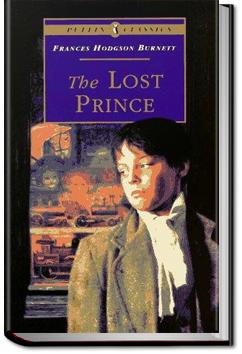
Today is National Read a Book Day, which means....READ! You might not be able to read an entire book today, but it would be great if everyone can take the time to read something lovely. And, as you would know from my previous post, one such lovely book is The Lost Prince by Frances Hodgson Burnett, a lovely but little-known classic that takes place in the 19th century. The Lost Prince is a great story to read before bed.


Let's read some of this wonderful story today. This passage is from near the beginning of the story when Marco and his father are talking about Samavia, the country they are from, and where the Lost Prince is from...


"We are of those who must LIVE for Samavia—working day and night," his father had answered; "denying ourselves, training our bodies and souls, using our brains, learning the things which are best to be done for our people and our country. Even exiles may be Samavian soldiers—I am one, you must be one."
"Are we exiles?" asked Marco.
"Yes," was the answer. "But even if we never set foot on Samavian soil, we must give our lives to it. I have given mine since I was sixteen. I shall give it until I die."
"Have you never lived there?" said Marco.
A strange look shot across his father's face.
"No," he answered, and said no more. Marco watching him, knew he must not ask the question again.
The next words his father said were about the promises. Marco was quite a little fellow at the time, but he understood the solemnity of them, and felt that he was being honored as if he were a man.
"When you are a man, you shall know all you wish to know," Loristan said. "Now you are a child, and your mind must not be burdened. But you must do your part. A child sometimes forgets that words may be dangerous. You must promise never to forget this. Wheresoever you are; if you have playmates, you must remember to be silent about many things. You must not speak of what I do, or of the people who come to see me. You must not mention the things in your life which make it different from the lives of other boys. You must keep in your mind that a secret exists which a chance foolish word might betray. You are a Samavian, and there have been Samavians who have died a thousand deaths rather than betray a secret. You must learn to obey without question, as if you were a soldier. Now you must take your oath of allegiance."
He rose from his seat and went to a corner of the room. He knelt down, turned back the carpet, lifted a plank, and took something from beneath it. It was a sword, and, as he came back to Marco, he drew it out from its sheath. The child's strong, little body stiffened and drew itself up, his large, deep eyes flashed. He was to take his oath of allegiance upon a sword as if he were a man. He did not know that his small hand opened and shut with a fierce understanding grip because those of his blood had for long centuries past carried swords and fought with them.
Loristan gave him the big bared weapon, and stood erect before him.
"Repeat these words after me sentence by sentence!" he commanded.
And as he spoke them Marco echoed each one loudly and clearly.
"The sword in my hand—for Samavia!
"The heart in my breast—for Samavia!
"The swiftness of my sight, the thought of my brain, the life of my life—for Samavia.
"Here grows a man for Samavia.
"God be thanked!"
Then Loristan put his hand on the child's shoulder, and his dark face looked almost fiercely proud.
"From this hour," he said, "you and I are comrades at arms."
And from that day to the one on which he stood beside the broken iron railings of No. 7 Philibert Place, Marco had not forgotten for one hour.


Happy reading!


]

The Lost Prince is one of my favourite books, telling the story of a boy named Marco and his father who are exiles from their homeland in Samavia (a fictional European country in the 1800s). It is a rather Arthurian story (the once and future king!), and like other books by Burnett, includes elements of Eastern mysticism and philosophy. Here is one quote that takes place during a conversation between Marco and his friend The Rat:

From The Lost Prince by Frances Hodgson Burnett (1915)
"'All thinking is part of the Big Thought,' said Marco slowly. "It KNOWS--It KNOWS. And the outside part of us somehow broke the chain that linked us to It. And we are always trying to mend the chain, without knowing it. That is what our thinking is--trying to mend the chain. But we shall find out how to do it sometime."


By our thoughts, whether they be part of our soul, spirit, or nothing more than fleeting ideas arising from our physical form, we are connected to the universe. The force, or the Big Thought spoken of here, that created us all is what we strive to return to. Our thoughts are one with it, but we often do not realize this while we're in a body (as a human being). In mending the chain that links us to the Big Thought (also called the One), we must also break the chains that links us to the material world, so that we are not bound by it and confused by the matter around us, believing it is all that exists. It is about becoming enlightened enough to perceive a higher order of things.
This seems to be a similar theme with other things I've written as of late, but it's not a coincidence! (In a future post I'll write about how the philosophical side of this can be connected to science, in particular, physics.)
Later on, Marco talks about the Law of The One. It is:
"There are a myriad of worlds. There is but One Thought out of which they grew. Its Law is Order which cannot swerve. Its creatures are free to choose. Only they can create Disorder, which in itself is Pain and Woe and Hate and Fear. These they alone can bring forth. The Great One is a Golden Light. It is not remote but near. Hold thyself within its glow and thou wilt behold all things clearly. First, with all thy breathing being, know one thing! That thine own thought--when so thou standest--is one with That which thought the Worlds!"
This is also a very Buddhist/Hindu/Taoist teaching, and the idea of a myriad of worlds is essentially a multiverse of different worlds with different dimensions or laws, all of which arise form the one thought. The One is the force that created all the worlds, all of which are still under its sway. This is also reminiscent of Neoplatonism: all lower planes of existence emerge from the One. We have "Nous" below the One (the Divine Mind), then Soul, and then Body (i.e., the material world). I could go into how the Kabbalah is related to this too, but you can just check out the previous post here.
And the mention of Order is interesting because it is common theme in all these philosophies that the One is a simple undifferentiated being (if it can even be called a "being"), and the worlds that exist below it are more differentiated and thus, can be prone to good or evil, love or hate, etc. It is like a beam of white light being dispersed by a prism: the white light is the One, and the coloured beams arise from it, but are not as pure and simple as the white light, and so can take on different characteristics. Yet still, they are all connected to the One, and it is by remembering this and dwelling in the simplicity of the One that one might mend the chain. We are trying to return to the mode of existence that is above our own, and although we can't do it in this physical form, we still ever strive to do it. Body is ever striving to return to Soul, a simpler and purer plane of existence (if you think of it in terms of dimensions, it is to encompass a higher dimension). And Soul is striving to return to Nous, and Nous to the One. So they are all linked, and so the metaphor of the chain is perfect for representing these different layers of existence and how one might attune oneself to the level of existence above it.
There is also the Law of That Which Creates, which Marco's father told him:
"Let pass through thy mind, my son, only the image thou wouldst desire to see become a truth. Meditate only upon the wish of thy heart--seeing first that it is such as can wrong no man and is not ignoble. Then will it take earthly form and draw near to thee."
This touches upon the power of our thoughts, how what we think draws the object of our thoughts toward us. Of course, it is not as obvious as thinking about getting something and then getting it, but if we attune ourselves to a certain frame of mind, we will more naturally be able to find others who think similarly and be drawn toward those things in the world. If we think badly of someone else, it will only come back to us, for we are also told that "Let him who stretcheth forth his hand to draw the lightning to his brother recall that through his own soul and body will pass the bolt." Thus the common saying that good begets good and evil begets evil.

I wish this book was more well known, because it is an amazing story that should be forever a Classic. And to all those seekers out there, I wish you well in mending the chain...

[Note: the black and white illustrations are from one of the original editions of the book]

"A Soul Wanderer never knows. He wanders; he makes his own path through the
heights of the universe."

-Sio Larwick


Follow Me on Pinterest

Mary-Jean's books

The Printer's Devil
The Crystal Cave
The Picture of Dorian Gray
The Lost Prince
The Fellowship of the Ring
The Hobbit
Rise of the Darklings
The Fire King
Clockwork Angel
Jane Eyre
Wuthering Heights
The Lost World
Around the World in Eighty Days
The Sum of All Men
Brotherhood of the Wolf
Wizardborn
The Lair of Bones
Sons of the Oak
Worldbinder
The Wyrmling Horde


Mary-Jean Harris's favorite books »
Powered by Blogger.