 I recently finished a book about the philosophy of the Druids, the best one I've read so far, and this quote is about one of the ideas the Druids had that is in common with many other ancient religions and philosophies.
From Sir John Daniel's The Philosophy of Ancient Britain (1926):
"The Science of Correspondences is therefore the science by which we perceive principles operating in the spiritual world, and by which we trace those same principles in the order of their progression into their types in nature, and thus prove by strict analysis the truth of our perception. It unfolds the correspondence between things spiritual and natural, between every object in the spiritual world, between God and His Church, and between the spirit and the letter of His Word."
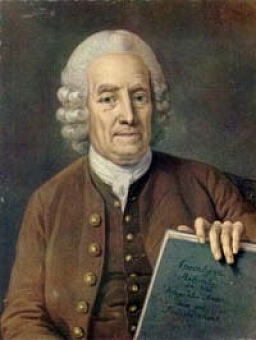
The Science of Correspondences (SOC, I'll call it for short), was first written about by Emanuel Swedenborg, though it was known to the ancients, such as the Druids, centuries before. The basic idea is that everything in the world, from plants to humans to stars and galaxies, corresponds to higher spiritual principles. This gives them their order, the laws by which they unfold. It's sort of the same idea as Plato's forms, the eternal, unchanging concepts that things in the physical world partake in, like a plant participating in the perfect form of "plantness", though it is never as perfect as the spiritual form.
Just about all of the Bible was written by means of correspondences, such as, as Swedenborg pointed out, the sacrifices, offerings, clothing, and all those little details about buildings and things that don't seem important, though convey a secret formula that can be read by people who understand the encoded SOC.
The SOC can aide us in understanding the foundations of our scientific knowledge as well, as John Daniel points out, saying that the scientist, "having done his utmost...to reach a solution to the riddle of the universe...is faced with a hiatus he cannot bridge, an infinity he cannot fathom." This sounds similar to what is facing physics right now (even though this was written in the 1920s), with the attempts of particle physicists to probe deeper and deeper into the nature of matter and the structure of the universe. The SOC can aide us in understanding the uses of things and their cause and effect. This is not to put a divine purpose into every little thing in the world, but to see greater patterns in the evolution of the world and the universe at large. It is "the Science of Sciences", what I think is a more metaphysical kind of philosophy of science. It connects the workings of the world with more basic principles, and as John Daniel says, "as the natural world is one of the effects whose causes are in the spiritual world, and whose ends are in the Divine, it is impossible to understand the meaning of one link without having regard to the complete chain."
 I think it is important to have more philosophy in sciences, especially physics dealing with the very small and very large, and the SOC is certainly a way to do this. Whether it will be able to 'bridge our hiatus', I don't know, but by uniting the spiritual aspect of the world with the physical (a very Aizian idea, if you've read my novel Aizai the Forgotten), we can certainly gain a better understanding of the universe. Especially with physics theories about the multiverse, extra dimensions, the universe as being a mathematical structure, and other such things, what if what they were describing is a fuller spiritual world? This could correspond to philosophies such as Kabbalism or Neoplatonism. For example, in Neoplatonism, each level of existence, "hypostases", is a reflection (or dispersion would be more fitting) of the one above it, and so the lower worlds are a reflection of the higher, creating a link between them. And so we see the well-known phrase again: "As above, so below".
If our physical world is derived from a higher spiritual world, we will indeed reach a limit in our understanding of the physical universe as John Daniel pointed out, even if there are higher physical dimensions and other worlds, because the laws that govern our world derive from laws that encompass a higher level of reality. So we have to go a step above, and science, since it deals with understanding the physical world, can't get there without something else. Mathematics might well connect our world to others, and we can already see this with string theory, higher dimensions, and other such theories.
It seems like the ancients, with their SOC, knew something which we would do well to uncover if we actually want to understand the universe we live in, and to understand ourselves.


 Check out here: https://museituppublishing.com/bookstore/index.php/now-available-in-ebook/aizai-the-forgotten-detail
Check out other Muse it Up Specials here: https://museituppublishing.com/bookstore/index.php/component/content/article/3-about/about-us/460-back-to-school-specials
This quote is from the same Druidry book as last week's post, and is about the different worlds, or realms of existence, according to the Ancient Celts:
From Brendan Cathbad Myers's The Mysteries of Druidry (2006):
"The threefold 'vertical' division of Sky, Land, and Sea, which roughly correspond to Heaven, Earth, and Underworld, is intersected with a fourfold 'horizontal' division of the Earth, the realm where we live, corresponding to the four cardinal directions."

The terrestrial, mortal world that we live in is called Abred. It seems to me that this is the only world where things can grow, die, and actually change. Obviously, the symbol for this is the land.
Lastly, the celestial realm, where spirits and deities exist, is called Gwynfyd. This is our proper home, and our soul is on the way there, though it may go between Abred and Annwin many times as it incarnates into physical form and then becomes a spirit (bodiless being in Annwin) in an intermediate period between its next incarnation. This is the Druid's idea of reincarnation. Similarly to many other religions such as Buddhism, the soul will eventually get out of this cycle to reach Gwynfyd (or at least, that's the goal). The number of reincarnations it takes to reach Gwynfyd is different for everyone due to their level of enlightenment, making some people "ready" for the higher world earlier than others.
These realms are united along a vertical axis, conjoining in a Sacred Centre on Earth, symbolized in the image of the World Tree. The Druids made passage mounds such as at Newgrange in Ireland (see picture) to unite these realms and so be able to pass between them or communicate with beings in the other worlds. At Newgrange, sunlight enters the inner chamber only once a year on December 21 (Midwinter's Day), where the sun is "born" anew. This is when the three realms come together at the centre, and life is renewed every year. So the Druids' idea of "creation" is not a single process, but rather something that is ongoing that we can take part in as well.

In the picture below, you can see the three worlds (named differently though) and the four divisions of the Earth:

 This quote is from the philosopher and poet Lao Tzu, who was also the founder of Taoism. There are many legends about him, including one where he rode a water buffalo (see picture on right), that he was born as an old man with a beard, and that he lived nine-hundred and ninety-nine years, but let's look at something that's fairly certain that he wrote:
From Lao Tzu's Tao Te Ching (~6th century BC):
"My words are very easy to understand, very easy to practice.
But no one is able to understand them,
And no one is able to practice them.
Words have authority.
Affairs have ancestry.
It is simply because of their ignorance, that they do not understand me;
Those who understand me are few,
thus, I am ennobled.
For this reason, the sage wears coarse clothing over his shoulders,
but carries jade within his bosom."
If you have read any more of the Tao Te Ching, you'll know that most of it is comprised of small verses like these. They're easy to read and are illuminating, but not always easy to understand. But although the first line of this one is debatable, it isn't too difficult to see the gist of it.
The sage (Lao Tzu, really) has no complicated philosophical advice, and he claims that his words are easy to put into practice. In the Tao Te Ching, we see a lot of Taoist ideas of living in harmony with the world around you and communing peacefully with the Tao, that ineffable principle by means of which everything in the universe exists. These principles are not about changing things externally, but molding oneself internally.
So although the sage's words are easy to understand and practice, few people can do it, because most of us do not have the right mindset. That is my reading anyway, because if people approach this looking for personal gain or some sort of higher qualities, they will not be able to reach the simpler truth of how things are. This is their "ignorance", an ignorance that makes them unable to see the world in a spiritual way (see my previous post for more on this). They are unable to see the way in which the sage's "words" will mold them and their view on life.
Now, why is the sage "ennobled" when few people understand him? Perhaps it is because few people have deeper insights about the world and their place in it, and so in order to truly understand the sage's teachings and to reach towards an understanding of the Tao (though you can never really understand the Tao because it's not something the human mind can grasp), you have to be one of these people. I think that anyone can have these deeper insights, but few take the time or effort to cultivate a more philosophical or spiritual attitude. Thus, to teach it to the few people who do is ennobling, but to teach it to people who would not understand would be wasteful, and those people could try to twist it to suit their own wishes.
My favourite part is the last sentence though: "the sage wears coarse clothing over his shoulders, but carries jade within his bosom." I think the "coarse clothing" is so that the sage does not physically stand out above others, because he too is human like everyone else. Yes, only some people can understand his teachings, but they are all humans and have a deeper connection to each other that can go unnoticed amid the vastly different clothing and worldly statuses of people in the world, in Lao Tzu's time just as much as today.
 But despite this, the sage has "jade", a precious stone, inside him, which is a finer spiritual nature. This leads him to pursue a humble life on Earth while still having knowledge of things beyond it. What is important, the state of the body or the state of your soul? Of course, if you are sick and dying, you can't do much philosophy (though Epicurus is a notable exception), but what do riches matter if you are empty and unfulfilled inside? So the sage does not bother to adorn himself, and not only that, he dresses simply to demonstrate that those sorts of things don't matter. He can dress like a peasant, but that does nothing to his inner "jade", the moral and spiritual spark that he cultivates by his philosophy.
This is what truly matters, and this is what will last with the strength of a precious stone, even though coarse clothing will wither over time.


