The Chinese philosophy Taoism emphasizes the harmony of the universe and following the Tao, or the "Way." The Tao can be understood as the pervasive spirit of the universe that we must align with in order to live a good life. Also prevalent in Taoism are Immortals (hsiens) who have transcended physical limitations, attaining superhuman powers and the ability to travel to other worlds. The idea of immortality, however, has changed over time. In particular, there is what we can call "worldly immortality" as well as "otherworldly immortality." The change of otherworldly immortality to worldliness is explained in this paper:

From "Life and Immortality in The Mind of Han China" by Ying-shih Yu (1965):
"The whole development of immortality both as an idea and as a cult from its beginning in the late Warring-States period down through Han times may be best characterized by one word: worldliness...The process of the worldly transformation of immortality is particularly well illustrated by the changing views on the life of hsien immortals. In pre-Ch'in literature the hsien is portrayed only as a secluded individual wandering in the sky, in no way related to the human world. But in Han literature we begin to find that the hsien may sometimes also enjoy a settled life by bringing with him to paradise not only his family but also all his chattels of his human life."

First of all, for a sense of context, the Han dynasty was the second imperial dynasty of China that lasted from 206 BC to 220 AD, though much of what is spoken of here is applicable to other periods of Chinese history.
To understand immortality, we must first look at longevity. Longevity is one of the most ancient desires sought after by the Chinese people. They have studied longevity and have striven to create drugs and other practices to prolong life, such as certain exercises (e.g., what is known as fetal breathing), abstaining from certain foods, meditation, and, strangely, by metamorphosing into a bird. This, however, is not the same as the later concept of a Taoist Immortal. Longevity is about extending your life to enjoy earthly things, even if it involves helping others or learning more; it is not about leaving the world to go to a higher place.
Such is the concept of "worldly immortality," extending our mortal life and what we have in it. It may involve living for long periods of time, hundreds of years, perhaps, though not indefinitely, so it's technically not immortality, though it was still called immortality in some periods. Magicians and philosophers such as the fangshi (see my previous post on the fangshi) were highly sought after by Emperors and princes who wanted to prolong their life, offering them such things as "drugs of no death" and promises of becoming immortal if they followed the guidance of the fangshi.
In contrast, "otherworldly immortality" involved becoming a true Immortal. Taoists believed that the Tao, or Heaven, produces life, and that the Earth nurtures it. The Earth is often associated with Te, or virtue, which is the way people must act in order to live in accordance with the Tao. Te is our inherent nature, which is tied to morality. When we truly live in accordance with our inner nature, we can become immortal, because the Tao is eternal, and aligning to the Tao can lead to personal immortality. Those who sought otherworldly immortality wanted to eventually leave Earth and live as a hsien immortal in higher worlds. These sages studied the esoteric arts, the hexagrams of the I Ching, and most often became recluses living away from human society in mountains or caves as they meditated and reflected upon the world. They could develop super-human powers, such as the enlightened monks who practice kung-fu, as commonly seen in movies where they have super-powers including the ability to fly.
The most well-known Immortals are the Eight Immortals, seen in the picture below:

The Eight Immortals appear in many Chinese legends, and have wild and fascinating stories written about them. They all, however, began their journey on Earth before attaining immortality, which they achieved by learning from a teacher such as the founder of Taoism, Lao-Tzu, studying themselves, and by using powerful devices such as a magical sword. There are also legends about immortals wandering about the sky and riding dragons and clouds. Of course, much of this is just legends, but the idea of attaining immortality is seen throughout Taoist philosophy.

The idea of true immortality came into existence much later in China than longevity, around the fourth century BC. Some people believe this idea was imported from other cultures (India? Egypt? I'm not entirely sure), though others hold the belief that it arose from extending the prevalent ideas of longevity. Attaining immortality and longevity often involved similar practices, such as meditation, martial arts, and the exercises previously spoken of. Yet otherworldly immortality focused on leaving the world rather than extending one's life within it. There is, however, a large overlap between the two notions.
During the Han period, the concept of worldly and otherworldy immortality blended together, largely due to the popularization of immortality by the fangshi, with promises that people could live forever by taking elixirs or engaging in peculiar activities. Thus, the otherworldly immortal became more "worldly," as we saw in the quote. Much of the spiritual nature of true immortality was lost by those engaging in elaborate means to become immortals while still retaining all their power and wealth on Earth. There was little interest in the otherworldly life of the true immortal. For example, the emperor Ch'in Shih Huang thought that there was a land of immortals past the Eastern sea, which he sent envoys to search for. This is different from the traditional idea of hsien immortality, which was not about finding a place of immortality on Earth, but ascending beyond it. In addition, Emperor Ch'end-ti had 683 sacrificial halls built with the hopes of meeting gods and hsien there. It is also thought that Emperor Han Wu-ti expanded his empire westward in order to find Mount K'un-lun where immortals lived, and he went to conquest the city Ferghana because they supposedly had "Heavenly Horses" which he believed could communicate with the hsien immortals for him. The traditional view of a reclusive, ascetic immortal was thus changed to someone who could still pursue worldly pleasures. So, as the author says, "the demarcation line between otherworldly and worldly immortality had become increasingly blurred." Indeed, even people who lived exceedingly long lives were often called immortals, which only furthered the shift of otherworldly to worldly immortals.

Yet despite this tension between the desire for worldly and more transcendent immortality, the concept of the true hsien immortal has been carried down through history. It is also similar to many other traditions that depict spiritual adepts with superhuman abilities, including the ability to live forever, in some cases, remaining in this world, or, in the ideal case, venturing beyond to a higher place.

***


Click here for more posts in my Quotes of Wisdom series.


Most ancient religions and philosophies have a secret "esoteric" doctrine revealed to a select number of initiates, as well as an "exoteric" doctrine that is revealed to the common people. When it comes to Buddhism, the esoteric and exoteric principles are very similar, though there are some details of esoteric Buddhism that you won't see in most Buddhist texts, for example, what is known as the Septenary Constitution of Man, or the seven principles that constitute a human being. I read about this in the book Esoteric Buddhism by the Theosophist A. P. Sinnett. One particularly interesting quote is:

From A. P. Sinnett's Esoteric Buddhism (1883):
"All things, not man alone, but every animal, plant, and mineral have their seven principles, and the highest principles of all--the seventh itself--vitalizes that continuous thread of life which runs all though evolution, uniting into a definite succession, the almost innumerable incarnations of that one life which constitute a complete series."

So first of all, what are the seven principles? Although they can be listed out as distinct principles, they are all intertwined, so bear in mind that listing them out fails to capture the connections between them. I'll call them by their English names and give the Hindu words in brackets:

1) The Body (Rupa)
2) Vitality (Prana or Jiva)
3) Astral Body (Linga Sharira)
4) Animal Soul (Kama Rupa)
5) Human Soul (Manas)
6) Spiritual Soul (Buddhi)
7) Spirit (Atma)

The first principle is simple: it's just the body, containing our organs, the molecules out of which they're formed, all the way down to the basic constituents of matter (mostly protons, neutrons, and electrons). On this level, everything is material: it is the matter that forms a human, the same matter that forms all physical objects such as plants, human or animal bodies, ice-cream, mountains, the air.

The second principle, vitality, is the start of life. It is organic matter. Like the body, it is still physical: it is the energy or force of a human. If we think of matter (m) and energy (E) as interchangeable (thank you, Einstein: E = mc^2), then the principle that vitalizes the body isn't distinct from the body, and is material as well. When the body of the living creature dies, the vitality is no longer united in the body but dissipates among the particles out of which the body was formed. This is because the higher principles that "hold the human being together" leave the body to reincarnate elsewhere, whereas the vitality doesn't undergo reincarnation.


The third principle, the astral body, is a step away from physicality. It is the etheric duplicate of the physical body, present in all living beings. It guides the second principle to form the shape of a human (or whatever other being it is), and it is in turn vitalized by the higher principles. The astral body only leaves the physical body at death, where it remains disembodied for a brief period before perishing. In some cases, mediums can separate their astral bodies while living, yet if it leaves the body permanently, the body will cease to be connected to the higher principles above and will die. This isn't, however, what is commonly known as "astral projection": in astral projection, the higher principles also travel out of the body, not just the etheric double of the body.

The first, second, and third principles all perish when a human being dies, though the higher principles, which we will look at shortly, are reincarnated in this world or another, continuing our spiritual life.

The fourth principle is the animal soul, also known as the vehicle of will. It isn't developed in living beings like plants, but only in animals (and hence, us). It includes emotions, passions, instincts, and sensations. It is focused on the material world and how we can gain pleasure and avoid pain. It is the instinctual part of our mind, the "id" if we're using Freudian terms. There is no intellectual thinking here, just instinct born of the natural world we live in.

The fifth principle, the human soul, involves thinking and individual consciousness. This is where our reason and memory lie. Those who are more enlightened have a more fully developed fifth principle. Most people are unable to connect with this part of themselves, or if they are, then it is rather as a slave to their fourth principle than as the rightful master over it. Yet just as individual people can be more fully evolved than others during the same time period, so too does the human species as a whole develop by evolution, and so as a whole, our species is still in the process of developing our fifth principle. 

The sixth principle, or spiritual soul, is our spiritual consciousness that connects us to everything in the world, as well as forming the source of our morality and compassion. It is our individual soul, our "higher ego". Since our fifth principle is undeveloped, it goes without saying that our sixth principle is as well. The spiritual soul is the vehicle for the seventh principle, so can be seen as a more individualized spirit, because as we go down to lower principles, we become more individualized and more material.

The seventh principle is the spirit itself. It is undifferentiated, and in essence, is the same spirit in everything. It could also be considered to be God, Buddha, or the One, the most abstracted part of us. We cannot describe it, for to describe it as anything but simple and pure would be to assign characteristics to it, and as it has no counterpart in the physical world, we will always fall short in our descriptions.

There is much more that can be said about each of these principles, but this is the general idea.
Now, the quote above touches upon how the principles are linked. The seventh principle, the universal spirit, is what binds the principles within us. What makes all these principles constitute a human being (or whatever other creature your higher principles are incarnated in) is the seventh principle, because the lower principles can be seen as particular instances of the universal spirit. The higher principles are bound together through multiple incarnations, though the three lower ones (body, vitality, astral body) are different for particular lives.
To use a common analogy from many occult traditions, it is like white light being dispersed by a glass prism: although it is in essence pure white light, it can be split into many colours. Likewise, the universal spirit can be "dispersed" into many spiritual souls, which can then be further dispersed into human souls and so on. Although things like plants and minerals don't have their human and spiritual souls developed, these principles are still present, only in a dormant form.

Later on, Sinnett says that "matter exists in other states besides those which are cognizable by the five senses." This might make you wonder how we could call it "matter" at all, for matter is something that occupies space and volume, though spiritual substances do nothing of the sort. However, although "occupying space and volume" is our dictionary definition of matter, that doesn't mean that we understand the whole story. Similarly to how Newton's equations to describe gravity were found to be a simplification of Einstein's laws, it is very possible that the physical objects we see around us are only a small part of a more encompassing spectrum of things that exist. I won't call them all "matter," because the soul and spirit are included too, but they can all be considered to be on a spectrum.
Perhaps a good way to think about this is with electromagnetic radiation. We have always been able to see light, which is the visible region of the electromagnetic spectrum. But in reality, that is only a small part of what's out there. There is radiation of all other wavelengths, as seen below:

We know that these gamma rays, X-rays, UV rays, infrared rays, microwaves, and radio waves are just as real as visible light even though we can't see them. We just need other tools to detect them, "senses" other than sight. In this case, we have to rely on instruments to detect them, such as Geiger counters (for X-rays and gamma rays), radio antennas, phototransistors (infrared radiation), and many other more sophisticated technology.
Likewise, when it comes to matter and the spirit, it could very well be that matter is analogous to the visible part of the electromagnetic spectrum, something we can perceive with the five physical senses. But this is very limited, because there is so much more out there that we can't perceive. Instead, we have to develop spiritual senses to detect them (which is analogous to the technology we had to develop to perceive other parts of the electromagnetic spectrum). These tools are spiritual senses cultivated through spiritual practices such as meditation, astral projection, visions, etc. This is what Sinnett calls the "missing link between materialism and spirituality," namely, that nothing in the universe is wholly material and nothing is wholly immaterial, but all are linked as in a spectrum (he didn't make the spectrum analogy, but I don't think he would have objected). So these seven principles of man are, in essence, the same thing, though have different qualities based on where they are in the spectrum.
This also provides the answer (at least, part of the answer) to the age-old question of how something immaterial (e.g., the soul) can interact with something material (e.g., the body). It is because they are all made of the same "stuff", but just in different proportions, with matter at one end of the spectrum and spirit on the other. This is what Sinnett referred to as matter existing in other states that we can't perceive by the five senses. And since the same kinds of thing can interact with themselves, as we see in the physical world where matter interacts by the four forces (gravity, electromagnetism, strong nuclear force, weak nuclear force), the different principles can also interact with one another.

So we shouldn't be surprised that human beings are so much more than simple matter and energy. Once we, as a species, come to understand what these mystics and philosophers have discovered, we can more fully appreciate our place in the universe and where we are headed in our spiritual evolution.


*Note: The book I quoted from is available online for free here. It's a fascinating book and I'd highly recommend it. One thing to bear in mind is that some other writers make the distinctions of seven principles slightly differently, with the astral body before the vitality, but I think Sinnett's classification makes more sense.


You may have heard of the recent discovery of a 1,000 year old mummified monk inside a golden statue of a Buddha. This is an example of what is known as a sokushinbutsu, a monk that has undergone the process of self-mummification to achieve salvation and immortality. This occurred primarily during the Middle Ages in Japan, China, India, and Tibet (though I'll talk about Japanese ones in particular). The notion of self-mummification may sound impossible and horribly gruesome, and yes, it is gruesome, but not impossible. Here is a quote from an article I read that was included in the book Rethinking Japan, vol II.

From Massimo Raveri's "In Search of a New Interpretation of Ascetic Experiences" (1990):
"The ascetic...is a rare witness of a perilous intellectual adventure towards an interior dimension of non-duality between ego and the other, between absolute knowledge and total annihilation, between the flow of history and a timeless dimension, that often brings him to the extreme limits of the mind, the body and the language."

This may sound confusing, but it will become clearer when we look at why the monks did this.
But first, how did these monks actually mummify themselves? After spending a period of time wandering among sacred places in Japan, the monk would take refuge in a cave of one of the sacred mountains. In solitude, he (there were no female monks) would spend a period of six years slowly starving himself, first eating only seeds and nuts while engaging in vigorous exercise, and then eating only bark and roots for three years. He would also drink poisonous tea made from the urushi tree that helped dry out his body, allowing his body to be preserved after death. During this time, he meditated and prayed. Eventually, he would be off food entirely, and would drink only water. Then water would go too, and his body would be little more than a living husk.

At this point, other monks would come to help him into a box and seal it. He was left with a bamboo tube for breathing and a rope with a bell that he would ring every day to let the other monks know that he was still alive. The idea was that if he stopped ringing it, he had died. The bamboo tube would then be removed and the monk would be left in the box for another three years, which would give his body time to thoroughly dry out. The monks would then retrieve the body, and if he was successfully mummified, he would be put on display in a monastery and seen as a "living Buddha." If he wasn't successful (i.e., if his body had begun to decay), he would be respected for his endurance, but not worshiped as Buddha. Yes, this is Buddhism we're talking about, not some cult of the dead (the Buddhists that performed self-mummification belonged to the shugendo sect).
Not many monks underwent self-mummification, but there have been enough since the Middle Ages that we have a fair number of them still preserved and worshiped as ascended Buddhas.
So why did they do this? If you look at it in the sense of ascension, wanting their soul to ascend to a higher world/heaven, what did it matter what happened to their bodies, because their soul (or consciousness, or whatever other "force" that is the Buddhism equivalent of the soul) will just leave their body behind? It seems to me that, like many things related to spirituality, emphasizing aspects of the physical world helps serve as preparation for where we are headed. It is a way to gain mental strength: if you can go through years of starving yourself and STILL have your mind attuned to the spiritual, to be able to meditate, and detach yourself from your body's suffering, then it is the final proof that you are ready to become a more enlightened being. Hence, not many monks actually performed this, because you had to be a very dedicated and spiritual sort of person ahead of time. This was really the ultimate test, and if you passed it, people knew that you were an enlightened being, which is why the mummified monks were worshiped after their deaths.
Another interpretation of this mummification was that the monks of the shugendo sect thought that by performing such ascetic acts, that they would develop spiritual powers. Some other practices that they did were meditating under waterfalls (which they still do) and gouging out their own eyes (I'm not sure if they still do this though. I hope not!). If nothing else, these were certainly some of the most determined people around.
The sokushinbutsu were not seen to be committing suicide, but rather, attaining immortality beyond the physical world. The purpose of this ascension was not only for themselves, but for the benefit of humanity: it was believed that the monks would eventually be called upon by the bodhisattva Maitreya to assist in helping humankind in the distant future, returning to the world in an enlightened state for the benefit of others. They were only able to return, however, if their bodies remained preserved on Earth, hence the necessity to preserve them via mummification. I assume, in order to make this work out, that Maitreya would help restore their old dried up bodies, otherwise, it would be quite creepy...
Now to return to the quote with another interpretation of the sokushinbutsu. Becoming a sokushinbutsu can be seen as a metaphor with the monk's body as a symbol that transcends the boundaries of religions. It speaks to people of different creeds who are all pursuing a spiritual path. In his article, Raveri said, "Taking the symbols from the past but often subverting their meanings, the mystic reveals the strength of many religious models and, at the same time, their caducity." (FYI, "caducity" means something that is transient, so in this case, I take it to mean that although specific religions and creeds come and go, the heart of them remains, which is similar throughout the world). The "language" spoken of in the first quote is the language of the unconscious, spoken through allegories such as the mummified bodies of the monks.
We see a spiritual quest represented in a physical symbol, where the "interior dimension of non-duality between ego and other" connects the ideas of immortality (the soul ascending to a higher world) and death (the monk's body; the "other" compared to the soul). Raveri also says that (note that "miira" is the same as sokushinbutsu): "ascetic self-mummification means the achievement of an ambiguous condition which is not life (because the miira does not have all the characteristics of a living person) but which also is not death (because the miira lacks all the classificatory features of a dead person)." So although this is part of a particular Buddhist tradition, it challenges many traditions by bridging the dichotomy of life and death into this strange symbol of the mummified body. It challenges people to think differently, to experience something spiritual by means of the physical.

Yet in all this, there is the danger of focusing too much on the body. After all, if you are starving yourself, it's hard just to ignore your dying body's needs, and at first, it may be even harder than if you are monk eating normally. The potential sokushinbutsu could, in fact, become prey to the same obsessions of starvation that people with anorexia have. Indeed, if you look at a monk starving themselves and an anorectic starving themselves, what they're doing appears similar at a brief glance. Yet what is different is the mentality behind it. The monks are not (in principle, one would hope) starving themselves for any purpose related to their body, but they are using their body as a tool to rise above the physical world and help others by their eventual return to Earth. Also, one would hope that they are not driven by anxieties: they don't focus on the fact that they are eating so little, but take it as part of their spiritual practice and use their remaining energy to meditate and pray.
And so there is a thin line between focus on the body for the sake of the body and using the body as a tool to rise beyond it in a spiritual sense. There is a danger in this fine line, and it will really determine whether the monk has become a true sokushinbutsu, a true Buddha, or if they have fallen prey to the limitations of the physical world. Hence in the bolded quote how the monk ventures in the abyss between "absolute knowledge and total annihilation."

So this practice of becoming a "living Buddha" is certainly fascinating, but I'm not saying it should have been done. It may have been right for some monks, but for the majority of them...well, if all monks did this, no one would be left. And so throughout Japan, the bodies that housed these brave souls continue to be preserved, and perhaps one day, we will see if they have been truly successful if the Buddhas return to Earth.


Note: If you're interested in this topic, I would suggest reading the article I quoted from, though it is incredibly hard to find (not online anywhere, I was lucky enough to find it at my old university library). However, if anyone can't find it and is dying to read it (no pun intended...), I scanned it in, so you can email me and I will send you a copy.


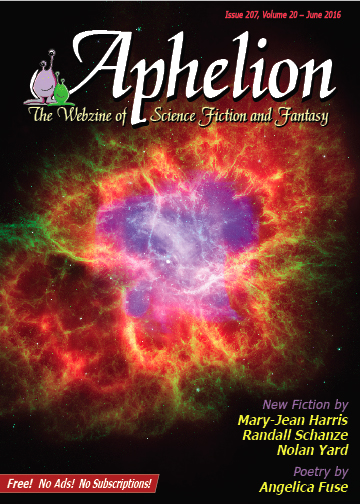
My short story, This Quintessence of Dust, is now available to read online (free) at the Aphelion Webzine!

Click on the cover to Enter!

File:Epicteti Enchiridion Latinis versibus adumbratum (Oxford 1715) frontispiece.jpgEpictetus, a philosopher from Ancient Rome, was one of the most well-known Stoics. He wrote a short book called The Enchiridion (or "Handbook") that outlined how you should live your life to attain tranquility. Despite common beliefs, Stoicism isn't about suppressing emotions, but cultivating a positive outlook on the world by getting rid of negative emotions and desires, and, like Buddhism, not being ruffled by external events.

From Epictetus's The Enchiridion (125 AD):
"A man's master is he who is able to confer or remove whatever that man seeks or shuns. Whoever then would be free, let him wish nothing, let him decline nothing, which depends on others; else he must necessarily be a slave."

Stoics separate things in our lives into two categories: things within our power, and things that are not. Simple enough. What is in our power are things like our opinions, aims, desires, aversions; what's outside our power are our body, job, reputations, and, in general, the external world. Now, we may have some influence over things like our body or our job, but on the whole, it depends on external circumstances beyond our control.
Once we've made this distinction, we can then see what we should concern ourselves with. Obviously, we should only strive to change things that are within our power, because if something isn't in our power to change, what use is there worrying about it? What use is there in bemoaning that a thunderstorm began during your picnic? You have absolutely no control over thunderstorms--it will happen whether you groan about it or not. The Stoics advocate that we have no desires and aversions related to such events. Instead, we should take them as they come, and learn to enjoy them. We should modify our desires to conform to what is and not vainly try to stop things that are beyond our control. If we eliminate desires and hatred of such things in the world, we will be able to attain tranquility.
So we should focus on what we can change. Namely, things that are internal to us. This might lead to change in the external world, but in order to succeed, we must strive to make changes in ourselves rather than the world. Sometimes, it's just about changing our specific goals. We should want to cultivate our reason and imagination. We should want to be moral. We should want to be a good citizen. All these things depend on how we think and act, something that's completely within our power no matter what external circumstances we find ourselves in. It may not be easy, but it isn't beyond our control.
Now, things that are semi-within our power, such as our body or job, have to be given a bit more thought. Instead of making goals such as "I will get a degree in physics," which is external and largely beyond our control, we should change the goal to be internal, such as "I will learn physics and do my best in whatever challenges are put against me." That is something within our power, and is the kind of thing we should make goals about. If we make goals like this, we'll never be disappointed (assuming we follow them through by working as best we can), and so won't be ruffled by external circumstances such as the contingencies that go into getting a degree (the specific questions asked on a test, the whims of the instructors and markers...) that are out of your power. This makes you the sole source of your triumphs and woes, giving you the power to change your life and focus on things that matter.
So that's a bit of background. Looking at the quote again, the first sentence is simply a definition of what it means to be a master or a slave. I think this makes sense: we want to gain certain things and avoid certain things in our lives, and indeed, we live our lives for the sole purpose of gaining or avoiding things (I mean "things" in the most general sense, so this includes internal qualities such as knowledge, love, tranquility, etc.). So if someone can give us what we seek or wish to avoid, then they rule over us, and literally determine our lives. We are a slave to them. For example, if our purpose in life is to be happy, and if the only way to do this is to get an injection of a happiness serum, then whoever controlled the happiness serum controls you, because attaining happiness is all you seek (in this example).

This means that if we desire things that depend on others, then we'll be a slave to them. There are certainly degrees to this, depending on how much you desire it, how much power they have over what you desire compared to how much you control it, etc., but to some extent, you'll be a slave. And unlike the simple example of happiness above, people have numerous desires and aversions, so even if we're only "a bit of a slave" to them all, you will be enmeshed in a web of slavery, each thread pulling you in different directions, preventing you from actually being free.
So we shouldn't desire anything that depends on others, in other words, things that are out of our control. For example, the weather is totally out of your control, so you should never desire anything of it. You shouldn't, according to the Stoics, desire that it will be a nice day, or that you will avoid being out on a bad day. Likewise, your reputation is beyond your control. Do what you will, but people will form opinions about you based on their own ideas and prejudices. Instead, we should focus on the things we can change. This, the Stoics tell us, will lead to tranquility and happiness, and I certainly agree with them. We'll be able to appreciate the world more, be able to view the world with a new sort of wonder. By being free of judgments, we instead experience the world rather than trying to change things we can't. Indeed, Stoics are often very happy people, experiencing the world without jaded indifference or complaining about things never being the way they wanted (this is the same as Buddhists and Taoists).
Thus, we should internalize our desires so that we are our own master. This is really what Stoicism is about: not being ruled by other people, their opinions of us, and unconscious things like the weather, but taking charge of our own lives. In theory, Stoicism isn't complicated: it's principles are quite simple. But putting them into practice is where the challenge lies. As with most ancient philosophies, these aren't just theoretical ideas, but ways to live our lives. That's one of the main differences between philosophy in the present compared to the past. In ancient times, and largely throughout history, philosophy was more comprehensive: it wasn't a discipline you just studied at school and wrote papers about, but a way to live your life. As the historian Paul Veyne said, "To truly be a philosopher was to live out the sect's doctrine, conform one's conduct (and even one's attire) to it, and if need be, to die for it." That last part is just gold: to find something that you would stake your life upon and die for. Because when you follow a philosophy or way of life that you would rather be burned alive for than abandon, then you know you truly belong to it and have found true meaning in your life.


Some Greek philosophers at the British Museum. From left to right: Socrates, Antisthenes, Chrysippus (a Stoic philosopher), Epicurus, and me :)

***

If you'd like to read the Enchiridion, it's very short, and is available for free here. I've also been reading a great book called A Guide to the Good Life: The Ancient Art of Stoic Joy about Stoicism and how to apply it in your life. It's very easy to read and I would recommend it to everyone and anyone.


"A Soul Wanderer never knows. He wanders; he makes his own path through the
heights of the universe."

-Sio Larwick


Follow Me on Pinterest

Mary-Jean's books

The Printer's Devil
The Crystal Cave
The Picture of Dorian Gray
The Lost Prince
The Fellowship of the Ring
The Hobbit
Rise of the Darklings
The Fire King
Clockwork Angel
Jane Eyre
Wuthering Heights
The Lost World
Around the World in Eighty Days
The Sum of All Men
Brotherhood of the Wolf
Wizardborn
The Lair of Bones
Sons of the Oak
Worldbinder
The Wyrmling Horde


Mary-Jean Harris's favorite books »
Powered by Blogger.