Aizai the Forgotten is included in a Young Adult Fantasy e-book bundle for only $1.99! Check it out while it's still at this super low price:
http://www.amazon.com/Captivating-Tales-Tween-YA-Bundle-ebook/dp/B00PR810K4/ref=sr_1_63?s=digital-text&ie=UTF8&qid=1417721539&sr=1-63

Posted by
Mary-Jean
comments (0)
Posted by
Mary-Jean
comments (0)

Posted by
Mary-Jean
comments (0)
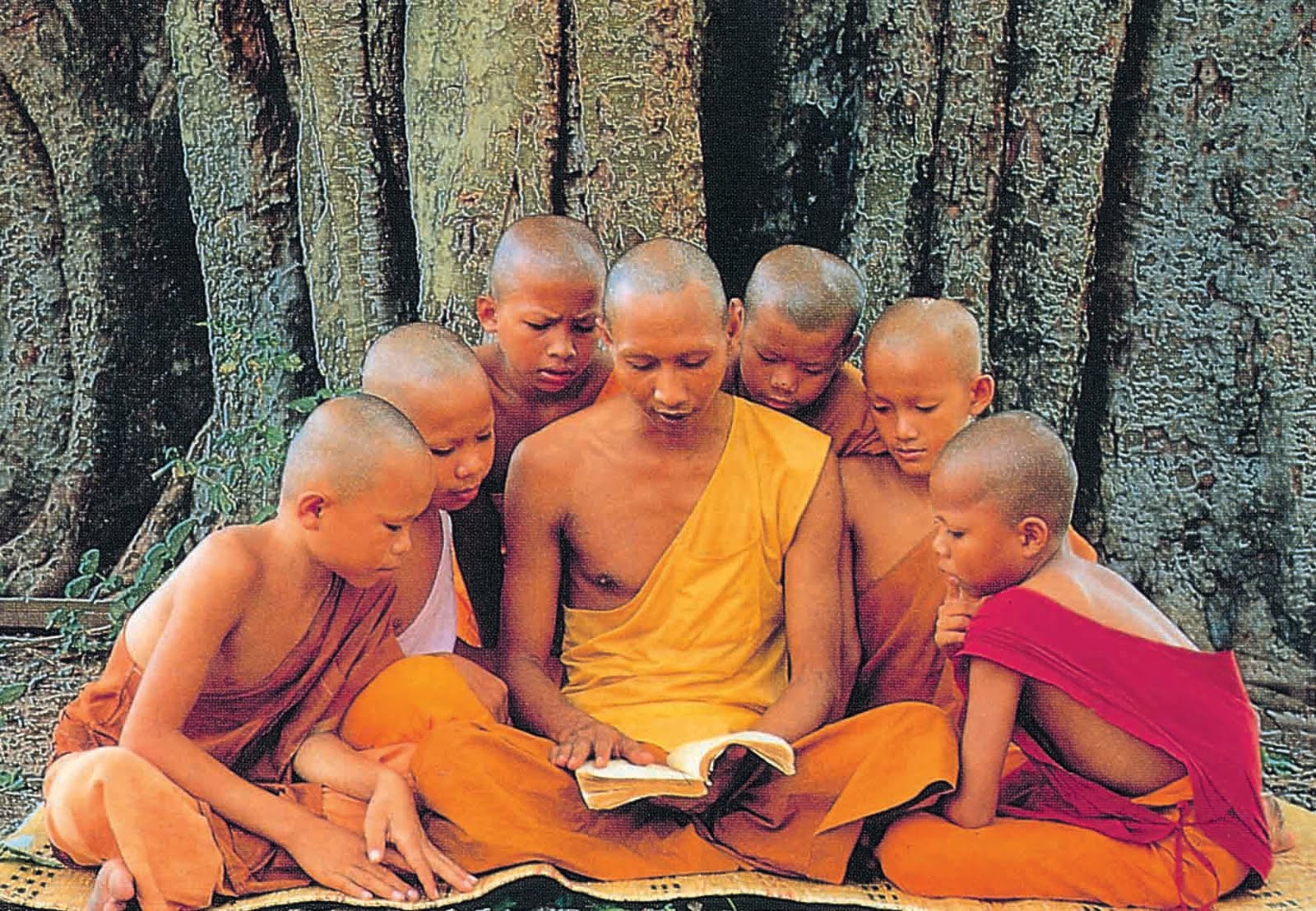
I've recently read The Dhammapada, a collections of sayings from the Buddha. It's a beautiful little book that you can read bits of when you like (though I read it from cover to cover). So here is the quote for today:

From The Dhammapada, (ancient Buddhist text)
"Your worst enemy cannot harm you
As much as your own thoughts, unguarded.
But once mastered,
No one can help you as much,
Not even your own father or your mother.
You are the source
Of all purity and impurity.
No one purifies another."
From this, we can see that the main contributor to your well-being is yourself, in particular, the state of mind from which your thoughts arise and form your perceptions of others and the world. So in order to help others, which is one of the goals of Buddhists, you must help yourself. Not by making yourself wealthy, but by cultivating your thoughts and intentions to good purposes.
 Others can teach you and guide you to the right path, but only you can walk it yourself. So by cultivating yourself, spiritually in particular, you will be better able to guide others to do the same, and allow them to purify themselves with the knowledge you possess from your own experiences. Although Buddhists focus on helping people achieve happiness and virtue, the ultimate goal is to attain liberation from the world and to achieve the state of Nirvana, and in particular, to help every sentient being in the world get there. This is not attainable through things like sacrifices but by purifying one's mind. As the quote says, the worst enemies to this goal, the ultimate goal, are your own thoughts. We all know that negative thoughts can have large impacts on ourselves, from what we believe, to our outlook on the world, to our actions that flow from them. We must really master ourselves as opposed to others: ultimately, it is not a war against whatever villain might be impeding our success, but the fear and hatred that is in ourselves, because that is what we can never escape from, even though we might be in a place that is safe from all physical dangers. Yes, we have to be free from those "villains" too, but once free of them, will we be able to survive with ourselves? (This isn't really in the Dhammapada. Shakespeare's Macbeth is an extreme example of what I'm thinking about). For who really is your worst enemy? We can be our own worst enemies, and so too our own saviours.
The path that Buddhists follow to master themselves is called the Eightfold Path, which has eight qualities to cultivate in order to awaken to your true nature, and to eliminate the negative qualities that might be obscuring it:

Tweet
Posted by
Mary-Jean
comments (0)

Today's post is about reincarnation in Hinduism, though much of this is in common with Buddhism as well.
This quote is from the Bhagavad Gita, when Krishna, the avatar of the god Vishnu, is speaking to a warrior called Arjuna to try to get him to do his duty to fight in a war (see picture-->).
From The Bhagavad Gita (ancient Hindu text):
"The Spirit is neither born nor does it die at any time. It does not come into being, or cease to exist. It is unborn, eternal, permanent, and primeval. The Spirit is not destroyed when the body is destroyed... Just as a person puts on new garments after discarding the old ones; similarly, the living entity or the individual soul acquires new bodies after casting away the old bodies."
The soul is called atman in Sanskrit, which is what Krishna is speaking about: it is eternal, and although we change as humans when we are in a physical body, the soul itself does not change. It is currently embodied because of its ignorance of the higher spiritual reality, by mistaking itself for the body it is currently inhabiting, and this causes it to undergo reincarnation until it can gain an understanding of the truth.
 The cycle of reincarnation is called samsara, which is ruled by karma. Karma, as most people know, is the result of our good or bad actions, and causes the person to be born into their next life in a body and place in accordance with what they have earned through karma. It may seem strange that the soul would accumulate affects from the body it inhabits when it is an imperishable substance. This is explained by the concept of two different bodies: the "subtle body" and the "gross body".
The subtle body is the vehicle for the atman to pass between lives. It contains our consciousness, intelligence, ego, and other mental properties. The gross body is just the physical body with all its senses. The subtle body is the link between the soul and the gross body, so that every action we perform (via the gross body) leaves an imprint on the subtle body. The soul will eventually have to experience the results of the actions imprinted in the subtle body. So even though the gross body is destroyed at death, the effects of its actions have been left of the subtle body, causing the soul to be incarnated again to experience these effects. It seems then, that by the very nature of actions, we cannot experience all of their affects in our present life, which is an interesting thought.
 The goal, however, is to escape this cycle and achieve spiritual liberation, called moksha. It's basically the same thing as nirvana in Buddhism. To attain moksha, one must abandon their desires and gain knowledge of their true nature. It is to free oneself from accumulating karma, both good and bad karma, because somehow, karma is what binds us to bodies. It makes it so that we are reborn again and again, which might not sound like a bad thing (if we're good), but beyond the cycle of samsara is a state of perfection where there is no suffering. Karma is based on actions, and we are meant to experience all the consequences ("fruits", it is called) of our actions by a certain kind of cause and effect, but Hindus also say that we cannot experience all the effects of our actions in our present life, which necessitates that we are born again so we can experience them. So we can only get out of the cycle by becoming detached to the fruits of our actions and freeing ourselves from desire, so making it so that we do not accumulate karma, since the point of reincarnation is to experience the fruits of our karma. This rests on realizing the true nature of ourselves, which is our soul, atman. At this point, all the lessons from our previous lives have been learned and all karma has been fulfilled, so there is no longer a need to return again.
This is similar to other spiritual traditions, where someone must gain truth about a higher reality (beyond the world they live in) and their own nature in order to escape from the burdens of the world to go to a realm of peace. It's interesting just how many different religions and philosophies have similar ideas about reincarnation, which might not be a coincidence. There are also many accounts of people who are connected to past lives, something sort of like a fluke, since we're not "supposed to" remember previous lives. You can read about how this relates to science in a neat book called The Soul Genome.

Posted by
Mary-Jean
comments (0)
See what me and other Muse it Up authors say about the process of writing novels:
http://museituppublishing.blogspot.ca/2014/09/sunday-musings-september-21-2014.html


